


On this page
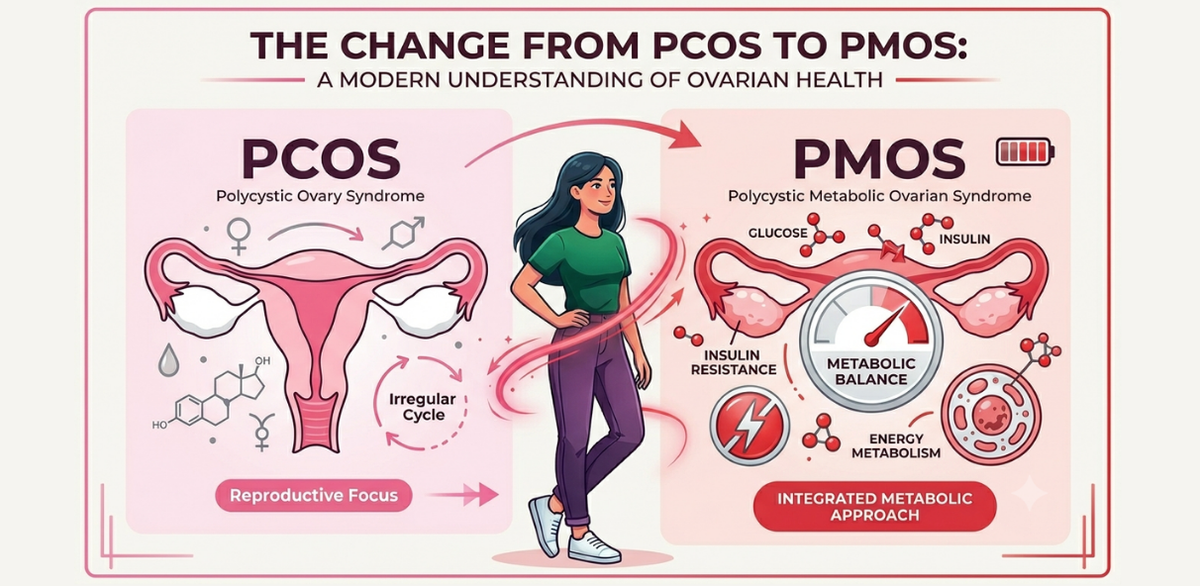
For decades, millions of people have been diagnosed with a condition called Polycystic Ovary Syndrome — better known as PCOS. But a landmark shift in the medical and scientific community is underway: leading researchers and health organizations are now advocating for a new name: Polycystic Morphology Ovary Syndrome (PMOS). This isn't just a cosmetic change — it's a fundamental reimagining of how we understand, diagnose, and treat one of the most common hormonal conditions affecting people with ovaries.
What's Wrong With "Polycystic Ovary Syndrome"?
The name PCOS was coined in the 1930s, and for nearly a century, it has carried with it a critical — and misleading — inaccuracy. The term "polycystic" suggests that the ovaries are covered in cysts. They're not. What ultrasounds actually reveal are dozens of small follicles — immature egg-containing sacs — not true cysts at all. This fundamental naming error has led to widespread confusion among patients and even some clinicians, creating misconceptions about the nature of the condition and the ovarian changes involved.
Compounding this confusion, many people diagnosed with PCOS do not have visible ovarian changes at all. PCOS is, at its core, a metabolic and hormonal syndrome — one whose defining features include androgen excess, irregular menstrual cycles, and insulin resistance — not ovarian cysts. The "polycystic" label has misdirected clinical attention for decades.
Enter PMOS: A Name That Matches the Science
Polycystic Morphology Ovary Syndrome (PMOS) is a proposed renaming that more accurately reflects what's happening in the body. The word morphology — meaning the form and structure of biological organisms — correctly describes the ultrasound appearance of the ovaries without implying a pathological cystic process that doesn't exist.
This shift is being championed by endocrinologists, gynecologists, and reproductive scientists who argue that more precise nomenclature leads to better diagnostic clarity, improved patient communication, and more targeted treatment strategies. When a condition is named correctly, clinicians can ask better questions, researchers can frame more accurate hypotheses, and patients can better understand what's actually happening inside their bodies.
Why This Matters Scientifically
The renaming effort isn't merely semantic — it reflects a deeper evolution in our scientific understanding of the syndrome's pathophysiology. Research over the past two decades has illuminated the central role of insulin resistance and hyperandrogenism in driving the hallmark symptoms of the condition: irregular or absent ovulation, elevated testosterone levels, acne, hair thinning, and the characteristic appearance of the ovaries on ultrasound (the so-called "string of pearls" sign).
Studies have shown that up to 70% of people with PMOS have some degree of insulin resistance — a metabolic dysfunction that amplifies androgen production in the ovaries and adrenal glands. By centering the name around ovarian morphology, researchers hope to encourage a broader, systemic view of the condition rather than reducing it to a single visual finding on an ultrasound.
Furthermore, the renaming aligns with the Rotterdam Criteria (2003), which define the condition by at least two of three features: oligo/anovulation, hyperandrogenism, and polycystic ovarian morphology on ultrasound. Morphology, not cysts, is already the operative word in clinical guidelines — making PMOS a natural and long-overdue update.
What This Means for People Living With the Condition
The psychological impact of a diagnosis matters. Research shows that being told you have "polycystic ovaries" leads many people to believe they have cysts that might rupture, cause cancer, or require surgical removal. This health anxiety is unnecessary and preventable — and it begins with the name. A transition to PMOS has the potential to reduce this misplaced fear and empower patients to focus on the hormonal and metabolic aspects of their health that are genuinely actionable.
Equally important: the condition affects approximately 1 in 10 people with ovaries worldwide, making it one of the most common endocrine disorders in reproductive-age individuals. Better naming means better conversations with healthcare providers, more informed self-advocacy, and ultimately — better outcomes.
The Road Ahead
Change in medical nomenclature is never instantaneous. It requires consensus from international professional bodies, updates to diagnostic codes (such as ICD classifications), educational reform in medical schools, and public awareness campaigns. The shift from PCOS to PMOS is still in progress, with advocacy coming from groups like the Androgen Excess and PCOS Society and numerous academic medical centers worldwide.
But the scientific and ethical case is strong. When naming catches up with knowledge, patients benefit. And for the millions of people navigating this condition — managing their hormones, their fertility, their metabolism, and their sense of self — that matters enormously.
At ALORI, we believe that understanding your body starts with understanding the science. The evolution from PCOS to PMOS is a reminder that medicine is always learning — and that we, too, can grow alongside it.
Hormonal support that works with your body.
Whether your PCOS presentation is androgen-driven or estrogen-related, restoring hormonal balance starts with supporting the systems that regulate it. The Balanced Baddie Bundle pairs Not Today, Estrogen and Cortisol, Who? to address both estrogen metabolism and cortisol-driven hormone disruption — two of the most common drivers behind PCOS symptoms.
References
- Ach Taieb, Gorchane Asma, Methnani Jabeur, Ben Abdessalem Fatma, Ben Haj Slama Nassim, & Ben Abdelkrim Asma. (2024). Rethinking the terminology: A perspective on renaming polycystic ovary syndrome for an enhanced pathophysiological understanding. Clinical Medicine Insights: Endocrinology and Diabetes, 17. https://doi.org/10.1177/11795514241296777
- Azziz, R., Carmina, E., Chen, Z., et al. (2016). Polycystic ovary syndrome. Nature Reviews Disease Primers, 2, 16057. https://doi.org/10.1038/nrdp.2016.57
- Rotterdam ESHRE/ASRM-Sponsored PCOS Consensus Workshop Group. (2004). Revised 2003 consensus on diagnostic criteria and long-term health risks related to polycystic ovary syndrome. Fertility and Sterility, 81(1), 19–25. https://doi.org/10.1016/j.fertnstert.2003.10.004
- Teede, H. J., Misso, M. L., Costello, M. F., et al. (2018). Recommendations from the international evidence-based guideline for the assessment and management of polycystic ovary syndrome. Human Reproduction, 33(9), 1602–1618. https://doi.org/10.1093/humrep/dey256
- Dumesic, D. A., Oberfield, S. E., Stener-Victorin, E., Marshall, J. C., Laven, J. S., & Legro, R. S. (2015). Scientific statement on the diagnostic criteria, epidemiology, pathophysiology, and molecular genetics of polycystic ovary syndrome. Endocrine Reviews, 36(5), 487–525. https://doi.org/10.1210/er.2015-1018
- Gibson-Helm, M., Teede, H., Dunaif, A., & Dokras, A. (2017). Delayed diagnosis and a lack of information associated with dissatisfaction in women with polycystic ovary syndrome. Journal of Clinical Endocrinology & Metabolism, 102(2), 604–612. https://doi.org/10.1210/jc.2016-2963